


A Family-Focused Look at the 2026 Chevy Tahoe
A full-size SUV starts to make sense when “enough room” stops being enough. Families usually feel it first in the small daily moments: the third row is no longer occasional, the cargo area is full before the last backpack goes in, or a weekend plan turns into a puzzle of people, pets, strollers, sports bags, and grocery runs.
The 2026 Chevy Tahoe is a strong example of why many families still look at full-size SUVs. It is not just about driving something bigger. It is about having a vehicle that can handle busy weeks without constant rearranging. For shoppers near Norwood, Canton, Dedham, and the Route 1 corridor, the better question is not “Is the Tahoe big?” It is “Would this kind of space make family life easier?”
For a deeper look at trims, powertrains, features, and specifications, explore our Chevrolet Tahoe research page. To compare current options, browse our new Chevy Tahoe inventory in Norwood.
Why Families Still Choose Full-Size SUVs
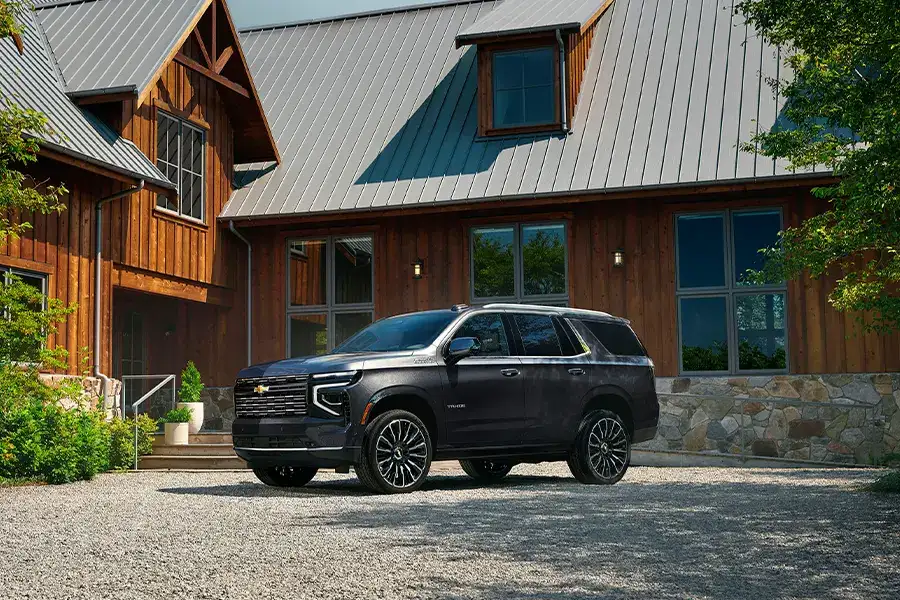
Smaller SUVs can be excellent for commuting, errands, and families that rarely use every seat. A full-size SUV becomes more compelling when passenger space, cargo room, and capability are part of the regular routine.
A Tahoe-sized SUV may be worth considering when you need:
- A third row that gets used often
- Space for kids, friends, grandparents, car seats, or pets
- Cargo room for groceries, luggage, sports gear, strollers, coolers, or school bags
- More breathing room on longer drives
- The ability to tow a trailer, small camper, boat, or weekend equipment when properly equipped
- Confidence for mixed New England driving, from winter mornings to packed summer travel days
That last point matters around Norwood. A normal week can mean school drop-off, a stop along University Avenue, gear for practice at The Skating Club of Boston, and a weekend drive to visit family in Dedham or Walpole. When the same SUV has to handle passengers and everything those passengers bring with them, size becomes less about image and more about usefulness.
When a Tahoe Makes More Sense Than a Midsize SUV
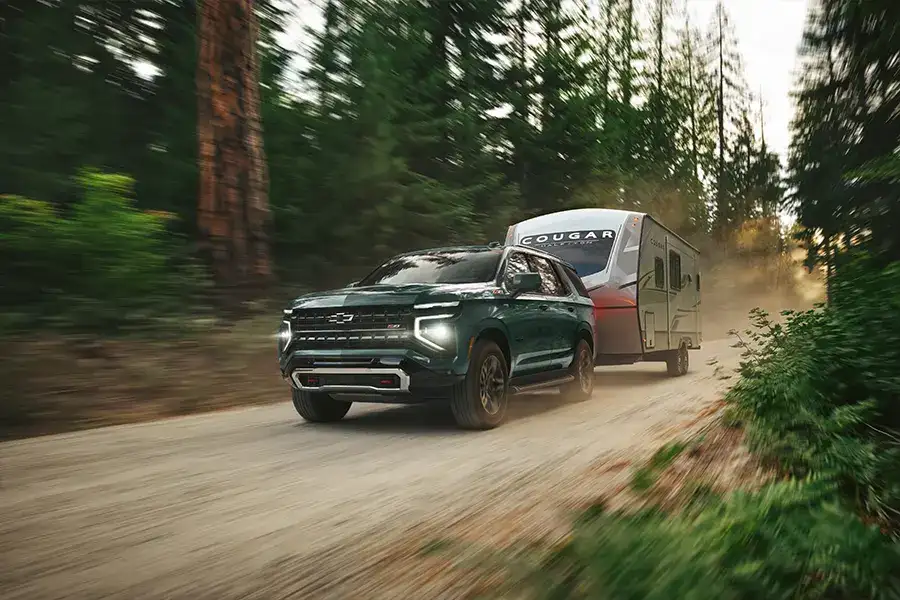
A midsize three-row SUV can work well when the third row is mostly for short trips or occasional guests. The Tahoe begins to stand apart when every row matters and cargo space still needs to be part of the plan.
That is the real difference. Families do not just need seats. They need room for people plus the everyday stuff that travels with them. The 2026 Tahoe offers seating configurations for up to nine passengers and up to 122.7 cubic feet of maximum cargo space with the second and third rows folded.¹
That flexibility helps when the day changes quickly. The same SUV may need to carry school bags in the morning, groceries in the afternoon, and folding chairs or sports equipment in the evening. It also gives families more room to grow into the vehicle instead of feeling like they have already outgrown it.
The Tahoe also makes sense for families with towing needs. When properly equipped, the 2026 Tahoe offers a maximum available towing capacity of 8,400 pounds.¹ Not every household needs that capability, but for drivers with a utility trailer, boat, camper, or extra weekend equipment, it can be a major reason to move up from a smaller SUV.
When a Smaller Chevy SUV May Be the Better Fit
The Tahoe is not automatically the right answer for every shopper. That is what makes a careful comparison worthwhile.
Drivers who spend most of their time commuting solo, parking in tight urban garages, or making short daily trips may want to compare smaller Chevy SUVs first. The Chevy Trax, Equinox, Blazer, and Traverse each serve a different kind of driver. Some families may find that the Traverse gives them the three-row flexibility they need in a more manageable size. Others may decide the Tahoe’s extra room, strength, and presence are worth the move up.
A useful test is to picture the busiest version of your week, not the easiest one. If your current SUV feels crowded during school routines, sports schedules, grocery runs, family visits, or weekend travel, a larger SUV may solve problems you deal with all the time.
The Real-World Family SUV Test
Before choosing a full-size SUV, walk through the questions that matter in daily use.
How often will the third row be used?
If the third row is only for occasional short rides, a midsize SUV may be enough. If that row is part of the regular seating plan, the Tahoe’s larger cabin can make the whole vehicle feel more comfortable and less cramped.
Do you need cargo space while people are in every row?
This is where many families outgrow smaller SUVs. Passenger space alone does not solve the problem if there is nowhere to put backpacks, bags, coolers, or luggage. A full-size SUV gives you more flexibility when people and cargo need to travel together.
Will you tow or carry bulky weekend gear?
Families with trailers, boats, campers, or heavy outdoor equipment should pay close attention to towing ratings, trailering equipment, drivetrain, and configuration. The Tahoe gives shoppers more capability to work with, but the right setup still matters.
Where do you drive most?
A full-size SUV can feel especially useful on longer drives, family road trips, and busy multi-stop days. For tighter city parking or smaller garages, shoppers should make sure the size feels manageable before deciding.
Which features make family driving easier?
Screens and horsepower get attention, but family comfort often comes down to the practical details: seating layout, camera views, rear-seat access, cargo loading, driver-assistance features, phone connectivity, and comfort on longer rides.
What to Compare Before You Pick a Tahoe Trim
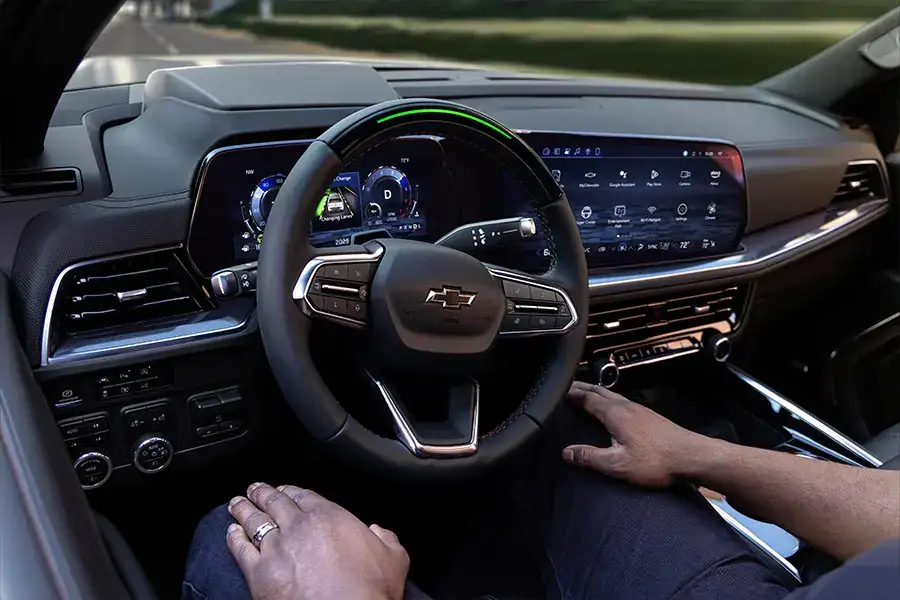
For trim-by-trim details, powertrain information, and feature availability, the Chevrolet Tahoe research page is the better next stop. For a first pass, focus on the decisions that affect daily life most:
- Bench seat or captain’s chairs
- Seven-, eight-, or available nine-passenger seating
- Cargo needs with all rows in use
- Trailering plans and required equipment
- Wheel size and ride comfort
- Technology and display preferences
- Camera views and parking support
- Comfort upgrades for longer family drives
A family using the Tahoe mostly for commuting, school routines, and weekend errands may prioritize different features than a shopper planning to tow regularly or spend more time on longer highway trips. Starting with real use cases makes the trim comparison clearer.
The Tahoe Around Norwood
A full-size SUV earns its keep when it turns complicated days into manageable ones. Around Norwood, that can mean loading skates and school bags for a stop at The Skating Club of Boston on University Avenue, picking up extra passengers near Norwood Central, or packing picnic gear, strollers, and outdoor toys for an afternoon at Bird Park in Walpole.
Those are the kinds of trips that expose the difference between “technically enough room” and comfortable, usable space. The Tahoe’s appeal is not simply that it is large. It is that the size supports the way many families actually move through the week: passengers one day, cargo the next, and both more often than expected.
Take the Next Step
The 2026 Chevy Tahoe is worth a closer look if your family needs a three-row SUV with serious space, useful capability, and the flexibility to handle daily driving and weekend plans. Start with our Chevrolet Tahoe research page for the detailed model breakdown, then browse our new Chevy Tahoe inventory to compare current options at Nucar Chevrolet of Norwood. When a full-size SUV fits the way your household really drives, it is easy to see why Everyone loves a Nucar!
0 comment(s) so far on A Family-Focused Look at the 2026 Chevy Tahoe